Red blood cells and circadian rhythms

on Thursday, February 3, 2011

Do you wake up every morning right before your alarm clock goes off and ever wonder why? This is due to circadian rhythms. Circadian rhythms are daily cycles (oscillations) of behavior processes that occur throughout the day (~24 hours long), such as sleep/wake cycles and eating. In humans, mutations in genes that control circadian rhythms can lead to disorders such as jet lag, shift work, familial advanced sleep phase syndrome (FASPS), delayed sleep phase syndrome (DSPS), and diabetes. Many researchers have conducted circadian rhythm studies, including myself, to better understand the underlying mechanism of the clock. In humans, the suprachiasmatic nucleus (SCN) is the master pacemaker that controls all oscillators in the peripheral tissues, such as liver, pancreas, lungs, and adipose tissues. These peripheral tissues all have their own ~24 hour rhythms; however, they are all kept in synchrony by the master SCN. In the past circadian rhythms were believed to only be linked to DNA and gene activity. However, on January 27, 2010 research from Universities of Cambridge and Edinburgh was published in Nature showing there are circadian rhythms in red blood cells. The reason why this research is so significant and interesting is that unlike other rhythmic cells, red blood cells do not have DNA.

These researchers developed a unique model system to study circadian rhythms in human red blood cells and a possible future mechanism for studying circadian rhythms in other non-transcriptional cells. In this experiment, the researchers hypothesized that peroxiredoxins oxidation could be used as the rhythmic marker in cells lacking transcriptional abilities (DNA). Peroxiredoxins are a class of antioxidant enzymes that regulate proper peroxide levels in the body. In order for something to be declared a circadian rhythm it must follow three properties, the first property being that a period of a rhythm must persist in the absence of temporal (time) cues with a period of ~24 hours, the term for this is called a free-running rhythm, secondly the period of a rhythm must remain the same over a range of temperatures, and third the circadian clock can be reset by external signals. The researchers tested these properties and did indeed find there are circadian rhythms in red blood cells. The researchers also tested how circadian rhythms could be interconnected to metabolic pathways; they did this by studying the NADH/NADPH levels found in red blood cells under constant conditions (free-running rhythm) and their data supports that there are ~24 hour rhythms. They also found rhythms in ATP indicating that the circadian rhythms found in red blood cells are from metabolic origin.

As a circadian researcher this research on red blood cell rhytmicity is very cool and these results spark interest in future studies to come. This research has laid the foundation for other studies on transcriptional and non-transcriptional cells, which could ultimately lead to a massive expansion of our understanding of circadian rhythms. From these studies we can also obtain a better understanding of cellular metabolism and peroxiredoxins.

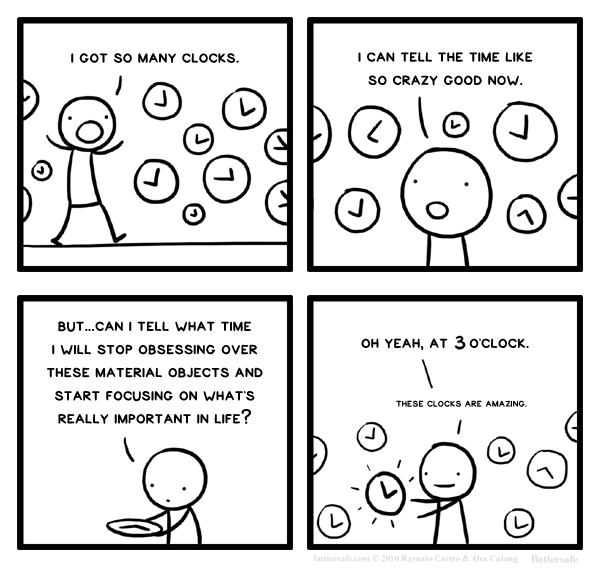
“Even a stopped clock is right twice a day” -Marie von Ebner-Eschenbach

Here is the news release about the research, also for the full Nature article you can find it through the Au library site without paying.


Sticky Situations (Traps)

on Tuesday, February 1, 2011


Have you ever been on the beach during a storm and wondered what it feels like to be a scared little mollusk stuck to a rock? Don’t worry the organisms have become well adapted for these conditions; in order to adapt they evolved a unique method to fasten tight to substrates which prevents their body from drying out, being structurally damaged, or washed away in a storm. How do they do this? They secrete a sticky substance that holds them tightly to objects in order to survive harsh weather conditions and tides. This sticky adhesive not only holds mussels in place it also heals wounds, which is why researchers have been working on producing a synthetic mimic. Scientists have developed many adhesives trying to mimic the mussels; they have also been working on perfecting the sticky substance to replicate the exact substance secreted by the mussel’s bristle fibers. Mussels have inspired many adhesives such as wood glue and antimicrobial healing adhesives.

This current adhesive product mimics the self-healing sticky substance produced by mussels. Mussel adhesives are unique to mimic because of their underwater and above water activity in healing microtears and their strong adhesive ability. This self-healing substance is made up of a large polymer molecule that has the ability to instantly reform when pulled apart. This adhesive has great medical potential because of its self-healing properties. The neat mechanism for self-healing involves metal ions that will automatically reform when the bonds are broken. This synthetic adhesive can be altered by changing the metal ion or altering the pH. In the future, scientists hope to use this self-healing adhesive to apply to wounds, similar to previous studies done on antimicrobial adhesives that have been used in underwater studies on dolphins and whales. This new stronger bonding material will reduce healing time and bandage time of an injured individual. You can read more about this article at http://www.sciencedaily.com/releases/2011/01/110127110656.htm.

The comic was found at http://buttersafe.com/2011/01/27/traps/ which has a large series of funny comics if you ever get the chance to check it out. The muscle photographed at the top was posted from the science daily article.

I tried to hook the reader with the title, comic strip, and question posed at the beginning. I then tried to use the arouse and fulfill idea by telling the research as a story and not just as facts. I used the show me don't tell me idea by incorporating organisms and adhesive products such as healing agents and glues to draw in the general public and not just scientists. I tried to make the research more interesting by hinting to concepts we talked about in marine biology, so students would go oh hey i learned about that in class and want to read more. I tried to make the story flow well by making relevant topic transitions between sentences and paragraphs as well.

Power Walk to Improve Memory

We all have seen them; the hard core, sweat-band wearing, 1 lb weight carrying, arm seizure swinging, power walkers at the mall. You have joked around with your friends that “when you get older you want to be one of them (wink, wink)”. The reality is that you really SHOULD want to be one of them. An article from ScienceNews explains how a recent study suggests that aerobic exercise in the elderly can improve memory. Up until this point memory loss was something thought to be inevitable, something that comes with the package of getting older, but to scientist’s surprise this isn’t totally the case.

As we get older, our hippocampus, the region of the brain responsible for memory formation, shrinks a little each year. This shrinkage is thought to be one of the causes of memory loss as we age. In this current study there were 120 people between the ages of 55-80 who participated for one year. Half of the participants partook in vigorous aerobic exercise for 40 minutes at least three times a week, while the other half spent the same amount of time doing less vigorous workouts, such as stretching and weight training.

MRI scans and memory tests were given to each participant at the beginning of the study, and once again at the end. To scientist’s surprise, those participants who partook in the aerobic exercise had improved on their memory tests, and both their left and right hippocampus had increased by about 2%. On the other hand, those who partook in less vigorous exercise showed a decrease by about 1% in both the left and right hippocampus. There was also no improvement on memory tests seen.

So, the next time you see a power walker at the mall, envy them, look up to them, and strive to be them when you get older. That way, when someone asks you “What did the hippocampus say during its retirement speech? , the joke of "thanks for the memories" is really on them!


Evaluation: I tried to "hook" my audience by beginning with a topic that almost anyone could relate to; power walkers at the mall. I also tried to arouse my audience by giving an exaggerated visual of power walkers, and then relating this topic to decreasing memory loss. I tried to stick in some humor in order to keep the audience's attention. Pictures were also used in order to split up some of the text, and also to "fulfill and show". One thing that I could improve on is making sure an active voice is used throughout.

Some bats use toilets too

Pitcher plant: a toilet by any other name would function the same, right? But what does your toilet do for you? The pitcher plant in is a large, carnivorous, pitfall trap like plant that lives in very nutrient-poor swamps in Borneo. A new Study found that these plants receive their nitrogen from bat guano.  Harwicke's woolly bat is quite small, weighing only four-grams (that's no bigger than a car key), and spends the day sleeping inside the cup of a pitcher plant. Because of their small size, two or three bats could rest inside the pitcher comfortably.  The pitcher plant has adapted itself to keep the bats from falling to the bottom of the pitcher and drowning in the digestive fluids. The pitchers have a tapered shape, for easy hanging, and less digestive fluids to spare the bats an untimely death if they fell inside (and also keep the monkeys from eating the insects that they have caught). This relationship isn't all about the safety of the bats.  In return for a safe and cozy place to sleep, the bats eliminate their wastes inside the plant. While this does not seem like a good trade, the pitcher plants benefit by absorbing their nitrogen needs from the bats droppings and urine. This sort of symbiotic relationship has only been observed in one other mammal: a tree shrew that uses another type of plant as a personal toilet. So whatever you use; the loo, the john, the lavatory, Privy, Netty, Latrine or a pitcher plant you can rest easy knowing that someone or something may using your waste for good: and if not, at least you don't have to sleep in it. 


I thought using the words "bats" and "toilet" in the title would draw people in (hook).  I added several pictures for visual interest (Show me, don't tell me).  I tried to arouse their interest by talking about a symbiotic relationship they may not be familiar with and talking about toilets, which most people aren't usually too comfortable talking about. I fulfilled this by explaining that unlike any other bats, the woolly bat sleeps inside of a plant, and the plants benefit from bat fecal matter. To keep them interested I added some pop cultural references and a little toilet humor.  I tried to keep the story from sounding like too much of a news story by analyzing the story as we went along and making little jokes that would make the story sound less boring.  
Notes: 
Images:
bat head